
An In-Depth Chat with the Legendary Giuseppe Risi
Words by James Edmonds and Connor Edmonds. Photos by Jack Webster, Kevin Collier and James Edmonds
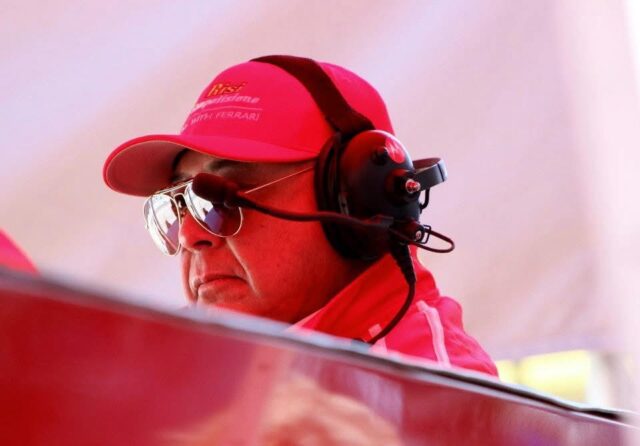
Sebring 2013. James Edmonds
Risi. What comes to your mind when you hear his name? Ferrari is quite likely. For many it would be the thrilling final lap of Sebring 2007 where Jaime Melo famously snatched an almost certain victory from the Flying Lizard Porsche of Joerg Bergmeister. But as the leader of one of the most successful GT teams in endurance racing history, there is a lot more to Mr. Risi than you might imagine.
Being the legendary figure that he is, and fielding cars for the most storied brand in the history of the sport, he cuts an imposing figure. Let’s dispel the myth with a little preamble.
It’s Sebring 2026. Friday after practice. With no scheduled interview set up ahead of time (for any team, large or small, time is limited over a race weekend, so time slots are tightly controlled), I approached Mr. Risi in the pit lane for a brief chat. Besides his huge success, he remains one of the most down to earth and easy-to-talk-to paddock figures you may come across. When asked if he’d be open to an interview over the weekend – not about this race in particular, but about his history – he said, “Of course.” I asked when would be convenient for him. “How about in 20 minutes at my trailer?” Done. This all happened on the spur of the moment, and I had no idea where photographer, Jack Webster was. After a quick call for help, Jack met us at exactly the right moment.
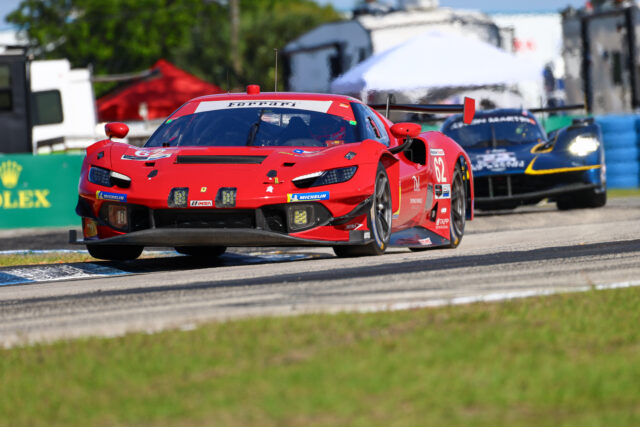
296. Sebring esses ’26. Kevin Collier
This is where appreciation for The Man turned to respect and admiration. When I approached one of the female team members in the paddock and told her we had a meeting set up with Mr. Risi, she said, “You must be Mister Edmonds.” It’s very seldom that this happens when nothing has been arranged ahead of time. Usually, it’s hurry up and wait. And who are you again?
We sat down with Giuseppe Risi in his immaculate trailer, with him in his trademark English flat cap, where he answered all of our questions with eloquence and passion. So where did it all begin? After all, you don’t just start racing Ferraris on a few bucks and a whim.
Born in Sicily, he later moved to Spain where he found an affinity for racing whilst living there. “Yes, I lived in Spain for nine years,” he explained, “doing hill climbs and things. We ran some Escort Broadspeed cars. Very good cars, by the way. And gosh, we won a whole bunch of races with that car and raced all over the place, but money was very short. I liked long distance racing, but basically, I set up the Formula One team in Spain with (driver) Emilio de Villota, and we ran a McLaren M23 and then a Lotus 78. Then we did the British F1 Aurora series.”
“…at the end of 200 miles, the wheels should fall off, and you’re out of petrol”
– Colin Chapman
“The McLaren M23 was in fact James Hunt’s spare car,” Giuseppe continues, “great car. It was identical to the car that he won the (1976) world championship with. And then with Emilio, we ran long distance races after that, and we ran a Lola T600, but Brian Redman won the championship with the Carl Haas car. Then we did a deal with Eric Broadly and…oh gosh, we won the 1000K’s of Silverstone, and I think we finished fourth at Le Mans with it. Good car. Very good car.
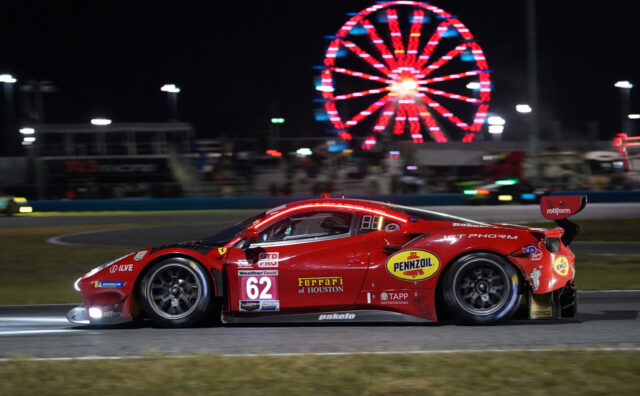
488. Daytona ’22. Jack Webster
In 1979, Giuseppe made the bold move to emigrate to the United States, but he had a plan. He describes how he became friends with Enzo Ferrari and subsequently a dealer for him in the States. “I met Mr. Ferrari in 1972 and I always kept up a relationship with him. He wanted somebody that spoke English and I speak English, French, and Spanish (and of course, Italian). I had an agreement with the Royal Automobile Club of Spain. So I stayed there, but I always stayed in touch with Mr. Ferrari, and then he mentioned that in 1980, things in America were gonna change.
“Up until that point, Ferraris were imported into the U.S. by Luigi Chinetti. But the federal government, in 1980, said that all imports had to be done by the manufacturer because of recalls. In 1980, they introduced the catalytic converters, where the manufacturer had to offer 50,000 miles, or five years warranty, and Chinetti was such a small organization. But Ferrari needed to have a physical presence here, and at that time Ferrari made, I don’t know, probably 1,600 cars for the whole world.” (Today, the annual number is 14,000).
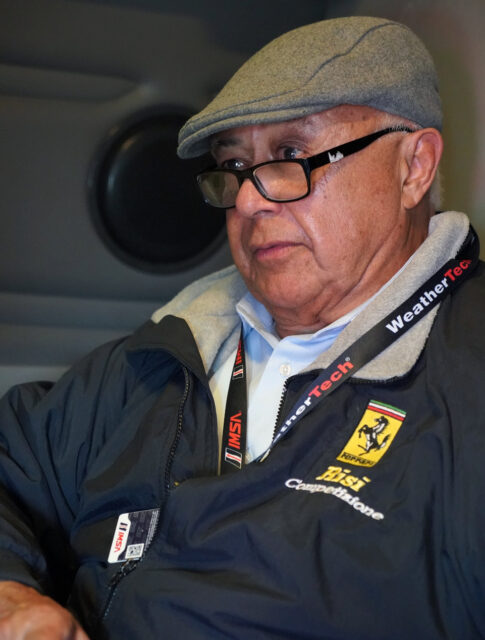
Giuseppe Risi, Sebring ’26. Jack Webster
Enzo has, over the years reached mythical status, in part because few people actually knew him. He has been painted as a ruthless businessman and team operator. One of the many legends, has him responding to the news of the death of one of his drivers with, “E la macchina?”. Giuseppe clarifies this but says there was a compassionate side, “Enzo Ferrari was always concerned with the customer. You know, he wasn’t just all about racing…well he was, but he also very much cared about the cars and cared about the customer, because he knew that was the basis of the whole thing. So, he wanted to reset everything in the US, and I said I’d give it a shot. But I said I wanted to go to a place that’s virgin – where there is no dealer, where there never has been a dealer, and Houston was one of those places, and that’s where I settled down.”
What made Enzo Ferrari choose Giuseppe Risi to represent him here in the USA? “Well, because of my reputation. Excuse me for saying so, but I’ve always had winning cars; because of preparation. Preparation is the most important thing. And always taking a very professional attitude towards it. There is no substitution for it. I’ve seen so many people come and go in this game.”
The specialized business of running a racing car team, whether it be grassroots-level karting or a grand prix team, has always been a sport made up of, and based upon human relationships and connections. One could easily argue that cubic dollars, marketing whizzkids and boardroom business deals are what sustain the sport now, but when Giuseppe Risi started to build his team, personal relationships and handshakes were the name of the game.
“The brakes were down to the metal. And even the metal had been consumed!”
“I created and had relationships with people like Keith Duckworth (Cosworth), Ralph Broad of Broadspeed, Eric Broadley (Lola) and Mike Hewland (Hewland gearboxes); it’s amazing. These people controlled motorsport. Because I lived in Madrid at that point – and it was difficult back in those days because Franco was still in power; he died in ’75 – it was very difficult to get parts. You had to get special permits to get cars in and things like that. And so, we had a shot at Formula One and Emilio de Villota turned out to be…,” Giuseppe pauses to find the right words, “…he lacked that last little bit of aggression to really get it, but in long distance racing he was fabulous, because he was extremely fit. We’d always just throw him in the car! In fact, at Le Mans, with the Lola, I think he drove for a total of 10 hours, I mean, just extremely fit. I was just with him in Spain the other day; he just turned 80 years old. Sadly, his daughter, Maria de Villota died in that big accident with the Marussia (F1) car, you know?”
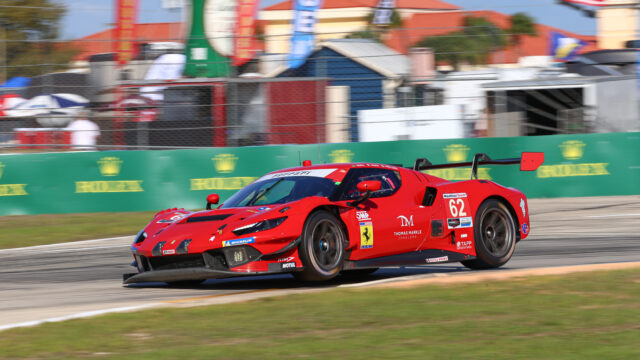
296. Sebring ’26. Kevin Collier
Giuseppe had just returned from Spain where he was celebrated for his 50 years of Spanish motorsport involvement and he shows no sign of slowing down. He continued to endear us with his story.
“But you see, back in the day, in the early ’70s, people like Enzo Ferrari would read. He was a very ardent reader. He read a lot, especially the papers and everything else, and there were not as many series as there are now. There was Formula Atlantic, Formula 2 and Formula 3, and not as many races. You know, Formula One, there were only 12 races a year. So he was always looking for bits and pieces. That came to light, and I knew Mauro Forghieri. I met him at the Spanish Grand Prix in Jarama, and he said, ‘Hey, I’ve got to talk to you, because we could use somebody with linguistic skills,’ because back then, very few people at Ferrari spoke English, but today it’s a necessity.
“So, the decision was probably made right about when we were racing in the Aurora series. I had an excellent rapport with Colin Chapman and one of the funny things about Colin was we were at Jarama one day, and they were testing – this was probably about ‘75, I think it was. It was just Lotus running, and it was just before the Grand Prix. And he was very quick talking. Colin talked very fast. But very elegant. I didn’t know him back then and he didn’t know me from a hole in the ground. I mean, I was just standing there next to the guardrail. And he said, ‘This formula, they’ve got it all wrong.’ It was almost like he was talking to himself, and I said, ‘Like how?’ just as the car went whistling down the straightaway. He said, ‘You know, a Grand Prix should be – whatever the distance is – the driver should be lying down, and at the end of 200 miles, the wheels should fall off, and you’re out of petrol.”
That anecdote lends credence to Chapman’s famous mantra: Simplify, then add lightness.
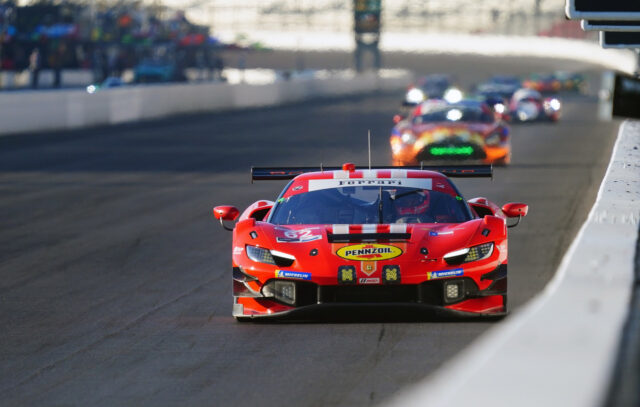
296. Indianapolis ’24. Jack Webster
“It didn’t hit me as hard until afterwards and I thought, gosh, this guy’s in another world, you know? Well, Hector Rebaque, bought this Lotus 78, then they also bought a 79. Rebaque had the 78 for a while and it was way ahead of the game. In fact, Ronnie Peterson, in the last race of the year (actually the penultimate race at Monza) when Andretti won the championship… Ronnie Peterson, got killed in the ’78. He was hit by Patrese. So in fact, we rebuilt that car for Lotus. It had a honeycomb on the side, and we’d had a little bit of experience with that, and he knew that we weren’t gonna go anywhere. I mean, everybody else was left in the dirt. That was a great car, that ’78. A little fragile, but…”
Having been around throughout the genesis of the modern grand prix car and with preparation having always been a key part of the Risi success story, it was interesting to hear what he thought about the differences between racing back then, and also how drivers are today versus their counterparts from the ’70s.
“Adrian Newey will get it, but there’s gonna be some tears in between until Aston Martin gets it sorted out”
“The drivers obviously back then, were – excuse the comparison – they were more of a cowboy type. And today, they’re more serious, because of sponsorship, because of what they represent. The names they have on their uniforms and things like that. But I always look for that absolute speed. Now, I’ve had some very good drivers. I mean, really good guys all the way through. But probably one of the best racing drivers that’s ever come through my team is Jaime Melo. No question about it. I mean, the guy was…he was in another world. He really was.”
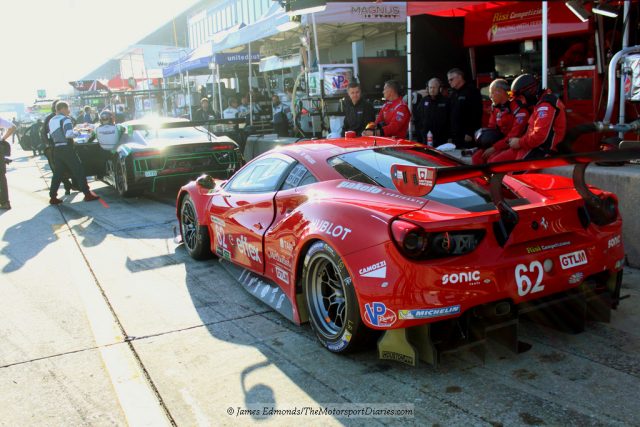
488. Sebring 2018. James Edmonds
Sebring 2007. Jaime Melo and Joerg Bergmeister. One of the most infamous race endings of all time. This writer was standing at turn 17 when it all happened. Neither driver backing down and the intensity of the battle was not realized until the replays were viewed afterwards. That race must mean a lot to Risi. He takes us back.
“Well, the thing is, we’d run out of brakes. He’d run out brakes! The brakes were down to the metal. And even the metal had been consumed! So when he hit the brakes, you know, there was nothing there. So, being the guy that he was, he really could make a car dance. I mean, he threw away his career for all kinds of reasons, but, I mean, he was probably one of the absolute very best drivers.” Giuseppe reflects on the past and shows his obvious affection for the 430 that bought so much glory to his team. “That was a good car. I still think that, obviously. Not because we won so many races with the 430 – and we won with the other things too, but…the 430 was an incredible car, really. I mean, absolutely superb.”
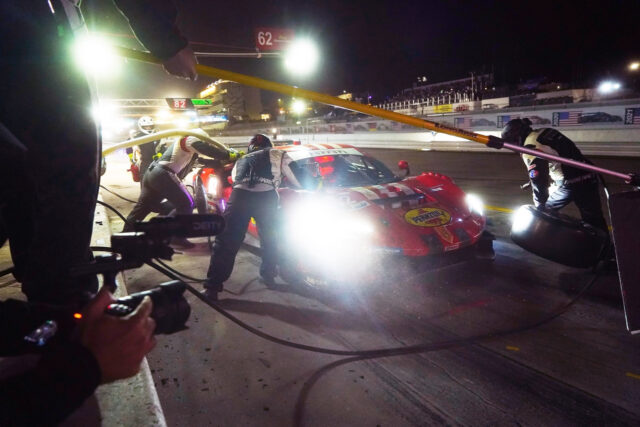
296. Petit Le Mans ’24. Jack Webster
On the subject of good drivers, Giuseppe has had some greats over the years. One who sprang to his mind was a wee Scot. “I’ve had Allan McNish who drove two races for us at Daytona with a 333. We’ve had all kinds of people. We won the very first Petit Le Mans, with the 333SP and Wayne Taylor, and what a car! We were revving it to 13,000rpm and one of the things that Allan said – and he was under Porsche contract at the time – he said, ‘I’ll never forget the sound of that engine. To this day.’ He’s a great individual. Mika Salo was a very good driver. He was with us for two years and said that it was probably one of his best times in motor racing, on a consistent basis, and with results. Yes of course, he drove Formula One for Toyota and he was racing the AF Corse car in Europe, but he always liked our cars – and excuse me for saying so – because our cars are always well-prepared.”
Preparation. In the history of legends who have said preparation is key, Colin Chapman, Ron Dennis, Roger Penske and Bob Tullius are a few who turned it into an art form. Giuseppe comes from that same school. Owning a large Ferrari dealership and running a successful racing team is not something that he entrusts to just anyone. His finger is still very much on the pulse and with preparation at the top of the list, his insistence on having the right people is highlighted by his amusing hiring practice for potential new mechanics.
“We’re flying over two hours of water. And you built the engine. So would you get in the plane?”
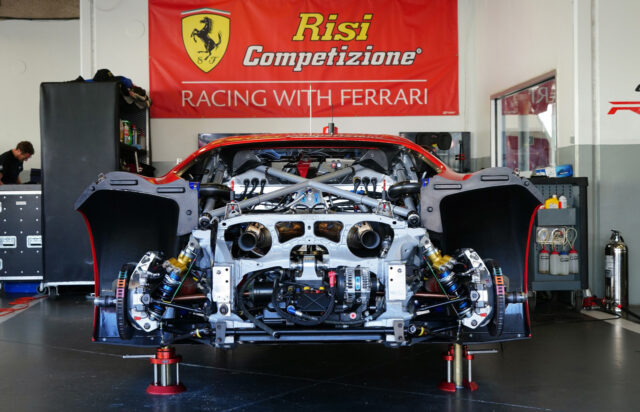
Preparation. Jack Webster
“In my earlier life, I was a pilot. I mean, I didn’t fly for long – long enough to get a commercial license – but my heart wasn’t in it. When I say young, I was in my early 20s. And I always cared about,” he pauses to gather the thought, “I’m not an engineer, I’m not a mechanic, but I’ve always had very capable people around, and I fall in love with cars. I really do. And that really is something that makes you almost want to jump in the gearbox and become one of the ratios in there! You almost want to become a piston and rev it even more. And that’s the sort of thing that I think to this day.
“One of the questions I always ask a mechanic when they come to work for us…we’ll go through what they’ve done, we’ll look at a CV and everything else and then I’ll say, ‘Okay, well I’m gonna ask you a very simple question. So, we’re in a single engined aeroplane. And we’re flying over about two hours of water. And you built the engine. So would you get in the plane?’ If he hesitates, the decision’s already made. But if he just sits there and pounds his chest and says, ‘You bet,’ then he’s my guy. And I use that absolutely to this day.”
The racing game has changed greatly over the years with the machinery and technology being just the tip of the iceberg. Drivers have had to change with the physical demands now imposed by modern tires, aero and brakes, not to mention the aforementioned sponsor commitments away from the racetrack. Giuseppe has been around long enough to have seen many of these changes and is excited about the state of IMSA.
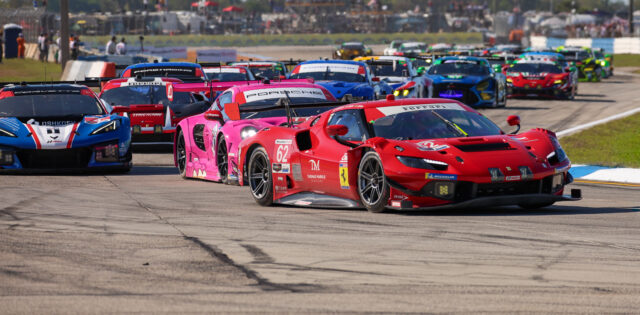
296. Sebring ’26. Kevin Collier
“I think IMSA…it’s got to be the best GT racing in the world. Not because I say so. It’s because the drivers tell me. I mean, these guys race all over the place. Le Mans, then they just came from Bathurst, and there’s a lot to be said for IMSA. We have our differences and certain opinions on how things happen, but it’s by far still – and I hope that the organizers of IMSA realize – that it is a fabulous series. And people come from all over the world to be here, not only because of the vehicle market.
“What’s different for us with Ferrari and opposed to everybody else, is that we’re not racing for market share. Because everybody is racing for market share, whether it’s Corvette that sells 30,000 cars a year, or BMW who sells 400,000 cars a year, Ferrari doesn’t use that. They don’t say that. In fact, even when they race their cars in Formula One or in WEC with the 499s, you would have thought, well okay, those are long distance cars and we can say, ‘Hey, look how great our cars are.’ Ferrari’s never been that way. It’s not part of the culture. And so, having said that, I think there’s still a great future in the racing. But there’s no question about it, IMSA is still one of the very best. I don’t know whether I’ll be around to see many more changes, because obviously, time gets on…”
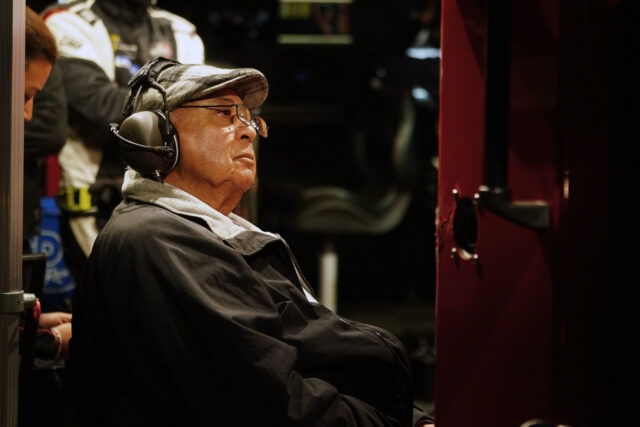
Giuseppe Risi. Petit Le Mans ’24. Jack Webster
I’d say the man still looks pretty good and I tell him so. As we discuss the future, the conversation inevitably turns to what’s in store for Risi Competizione and what’s next. Would we ever see a 499P running number 62 in IMSA? He chuckles with a wry smile, “No. No, I don’t think so. First of all, it’s a very, very expensive car to run. And until Ferrari and IMSA make a pact of sorts, I doubt it very much indeed. It is an expensive car. There was talk at the beginning, when the concept was originally discussed for privateer teams like ours. If we had the budget to run it, but it’s just horribly expensive. And then you’ve got all the hybrid. The battery alone is 300,000 euros, and it’s a throwaway, for example, and it just requires extremely deep pockets.
“So, it’s a whole different realm that you’re gonna get involved in. You need a small army of people, really. To answer your question, I don’t see Ferrari coming over here to do it. If they felt there was a need to do it, they probably would, but with the World Endurance Championship, I don’t know. Ferdinando Cannizzo was here, who leads the whole thing on that side, and I don’t think it’s gonna happen. I know that IMSA goes back every year and tries to coach Ferrari to come and approach them, but I don’t think they’ll do that. Right now, Ferrari runs a third 499, but it’s the customer that buys the car who also has to pay for it to run. So no, I doubt very much, we’ll see it here. I mean, IMSA would have to promise Ferrari a number of things and you know, Ferrari is very difficult to deal with.
“But they are genuine. Genuine in that there’s one thing that’s important with Ferrari… winning. Obviously, it’s important, but not at all costs. Representation of the mark is what is important. Whether it’s a shirt, whether the horse is embroidered right, and the way it’s placed, little things like that. And you think nobody’s watching, but everybody’s watching, because that’s what it’s all about, through thick and thin. When you look at the problems they had last season in Formula One, it’s only because of the name, I mean, a lot of teams would not have been able to handle that. Taking such a beating, and now, hopefully, they do something else.”
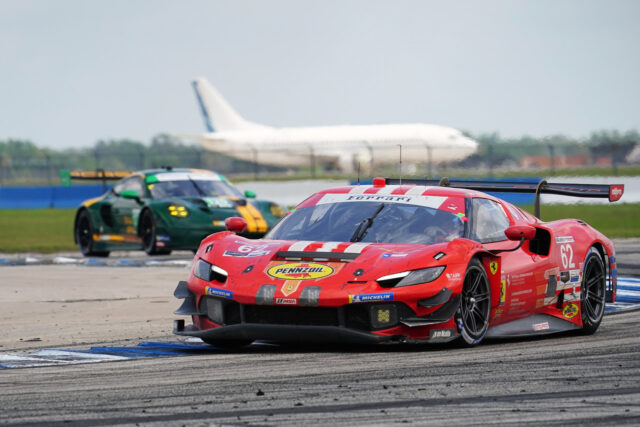
296. Sebring ’24. Jack Webster
Having had past experience in F1, it feels only natural to get his insight into the 2026 season and what’s in store. “Ferrari looks good, but, with people like Newey,” Giuseppe segues, “I know Adrian quite well. In fact, we ran the very first 24 hour race in Dubai together. This was, I think, 2008 and Adrian’s a very competent driver, by the way. We were in the lead with the 430. So coming into the pit to refuel, you had to go in, and there were just fuel pumps, like hand pumps. Adrian was driving; I don’t know what he did… I mean, only 10, 15 miles an hour, and as he comes in, he hits this post, breaks his thumb, and, of course, damages the rack and pinion while we were in the lead, and that was it!
“Adrian always drew all the stuff himself, on a drawing board. Like in the old days, you know? And so I teased him and said, ‘Well, you know, now you’re gonna have to slow down!’, but he’s such a nice guy. He took on too much when he went to Aston. And the reason why I’m talking about him is, he’s such an absolute thinker. I mean, he turns things upside down, inside out. He’s on a Colin Chapman level, and that’s the kind of guy that he is. It was the same with people like Mauro Forghieri who was even more than just the car designer. He designed the gearbox and the engine as well. I mean, these guys were in another world. And I think Adrian will get it, but I think there’s gonna be some tears in between until Aston Martin gets it sorted out. They’ve got enough money, because they’ve got Aramco involved. And I think the people at Red Bull will also get it sorted out, because Ford will just throw money at it.”
“What’s got me through my life has been the two fundamental things: Respect and discipline.”
As we wrap up our time, and after talking about the past, present and future, Mr. Risi talks about his legacy. During our lengthy chat, I realize that he has lived up to his reputation which always precedes him. A warm, welcoming and charming man who epitomizes the adage, ‘Speak softly and carry a big stick”. His team was built on his reputation and willingness to make sure he hired the best people, prepared his cars to the nth degree and most importantly, treated people with respect. Now he’s looking to the future generation to keep it all going.
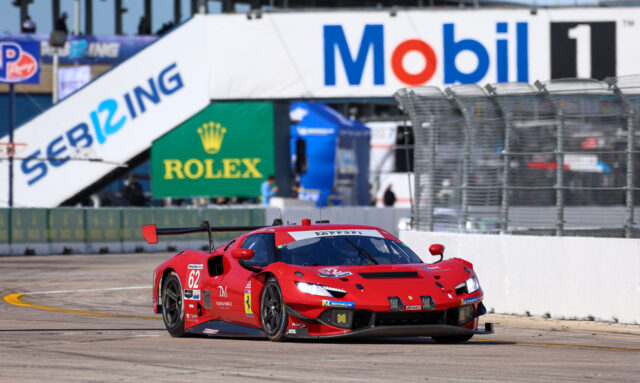
296. Sebring ’26. Kevin Collier
“When I lived in Madrid, one of the things I did with Emilio (de Villota) before I knew I was gonna come over to the United States, we made a blueprint of a racing driver school to be at Jarama. Later I said, ‘Emilio I’m gonna go to the States’. He continued racing, and then he started the school. Well, that school is where, for example, I met Carlos Sainz Sr when he was 14 years old. His uncle was racing a Simca, and I was selling him some special bits and cams and whatever else for it. And his son, (Carlos) Junior, was actually taught by Emilio’s daughter, Maria. She was actually the instructor for him. And so, all the Spanish drivers have been through that school. When Maria died, Emilio said he couldn’t go to the school and run it, but the school’s still in operation. I mean, everybody, Alonso, every Spanish driver has gone through the school from go karts and then junior formulas. Everyone and everything went through there with Emilio.”
What is something about Giuseppe Risi that nobody knows? “Well, that’s a good question. I don’t sell it, but part of what’s got me through my life has been the two fundamental things: Respect and discipline. And one borders the other. I mean, if you have respect, you automatically have discipline. And if you have discipline, you automatically have respect. And I think this is something that’s lacking in the world today. It’s so basic, and it’s part of our culture, and then from there, you can go and do anything.
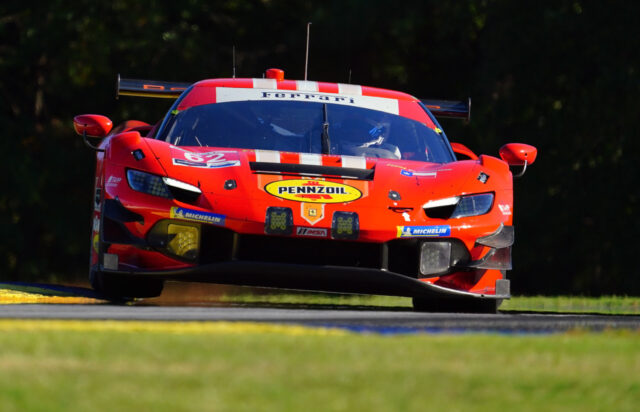
296. Petit Le Mans ’24. Jack Webster
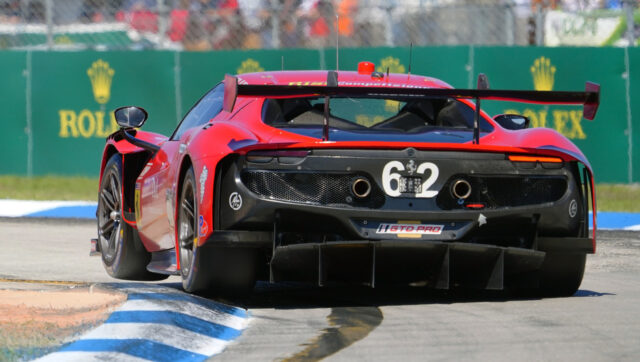
296. Sebring ’26. Jack Webster
“The other thing which I’d like to mention, is that I have a project. Whether I will be able to carry it out completely,” he shrugs, “is to have a school for mechanics. You’ve got to come with some experience and for high end mechanics. I know we won’t go back to the days when you’d spit on the exhaust to see whether the thing was burning or not, but nonetheless, I think there is a tremendous group of young people out there that would like to, but there is no way. Yes, they have technical schools, but the thing that the young folks today need to understand, is they have to serve an apprenticeship. In fact, we’ve heard it over the last year or so. They’re telling young folks, forget about just getting a law degree, or getting any kind of degree, okay? Get a trade. That’s what they’re being told. And I’ve had this in mind for a long, long time. And this is something that I would like to do. And then with that, and with the knowledge from the people I know everywhere, you have somebody come in, whether it’s from Ferrari, whether it’s from Honda, and teach some of these young guys. Then you provide the funds for them to go to Italy or Japan. But I’m shooting high. It’s not gonna be just a technical school – put a little engine in, or let’s take it apart. No. That’s very much something I’ve been working on for maybe seven, eight years. The legacy is, I’m not gonna take any of this anywhere. That’s one of the things that’s in my mind every single day. So my whole involvement in motorsport has been pretty complete, you know?”
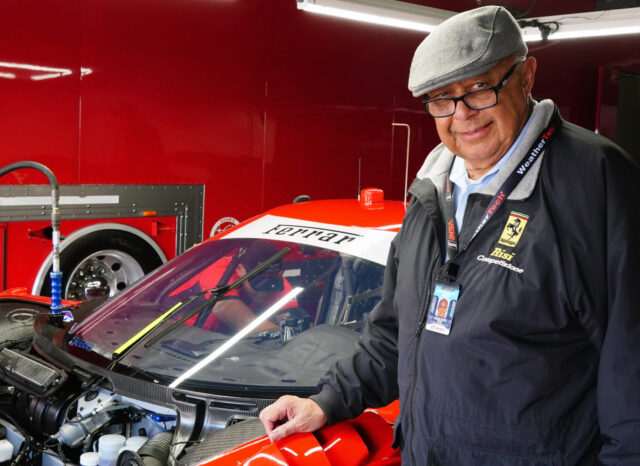
Sebring ’26. Risi Competizione. Jack Webster
Risi Competizione has raced and won championships in IMSA, the American Le Mans Series and the Rolex Sports Car Series as well as earning three class wins at the 24 Hours of Le Mans in 1998, 2008 and 2009. Read more about Risi Competizione drivers here
Forza Risi Competizione.