
Generations at The Glen
By Tony Holloway. Photos by Jack Webster
2026 SVRA Mission Foods Racing America at Watkins Glen
Jack Webster grew up on a farm outside Dayton, Ohio, beneath the final approach to Wright
Field. As a boy, he was more interested in airplanes than automobiles. Indianapolis was only a couple of hours away, and in high school he occasionally made it to the Speedway for practice and qualifying. A ticket to the actual 500 was beyond his means.
He didn’t own a 35mm camera until 1968, when, as a high school junior, he mail-ordered an East German Praktica for $85. He photographed whatever presented itself: people, landscapes, airplanes, his 1961 Sunbeam Alpine. In the beginning, race cars weren’t much of a consideration.
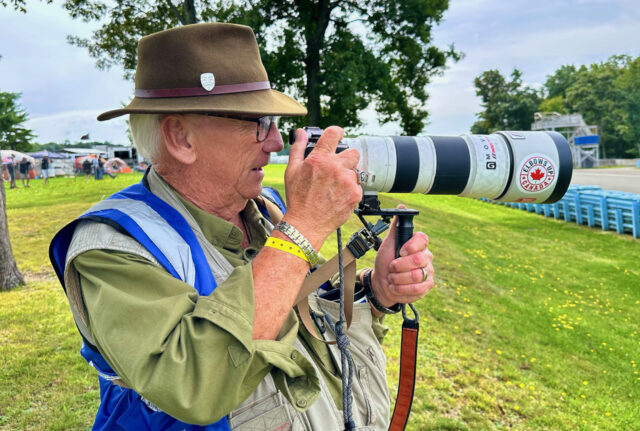
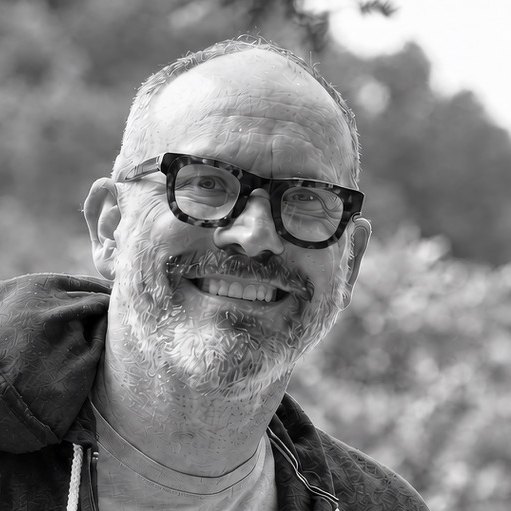
The unmistakable Jack Webster by Tony Holloway
Then…Steve McQueen came along.
In June 1971, Jack went to see Le Mans on opening night. The movie offered almost no plot and very little dialogue, but it had plenty of fast cars. Jack walked out of the theater determined to see sports-car racing for himself. The following day, a coworker informed him that he didn’t have to travel to France. There was a racetrack called Mid-Ohio only a couple hours away.
On August 22, Jack arrived at Mid-Ohio Sports Car Course with his camera. Jackie Stewart won the Can-Am race. More importantly, something took hold of Jack Webster.
Two months later, he climbed into his Fiat 850 Spyder and drove to upstate New York for the United States Grand Prix at Watkins Glen. He had no press credentials, no place to stay and apparently not much of a plan beyond getting there. Access was easier in those days. Jack discovered that if you carried a camera and looked like you knew where you were going, people generally assumed you did.
From the pit-roof seats, he photographed François Cevert raising his arms as he crossed the finish line to win his first Grand Prix. It would also be Cevert’s last. Two years later, he was killed during qualifying at Watkins Glen.
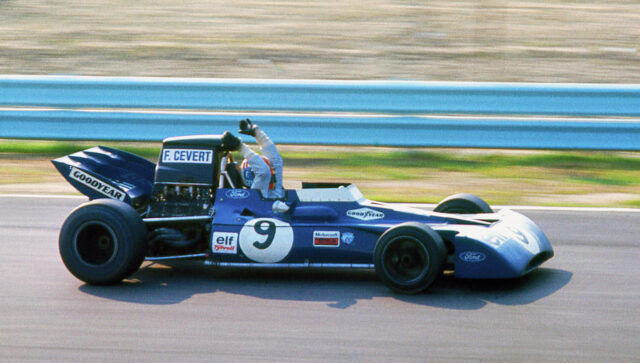
Cevert victory 1971 GP
Jack kept taking pictures.
For more than half a century, he photographed the drivers, cars and circuits of motorsport. Eventually, that life’s work was collected in a book he titled, Racing Pilots.
Motorsport inevitably became a family affair. Jack’s son and daughter grew up going to races with him, and when he began selling motorsport art at events, they helped man the booth. Racing wasn’t simply something their father disappeared to do on weekends. It became part of the landscape of their childhood.
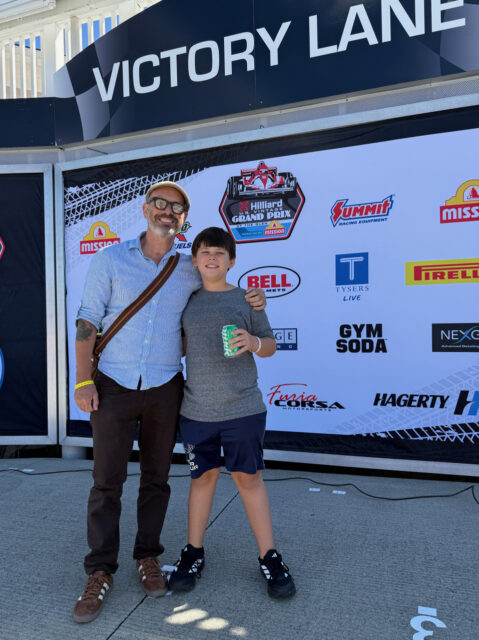
Tony and Eliot
In 2014, Jack became a grandfather. The indoctrination began almost immediately. When my son Eliot was little, Grandpa rarely arrived for a visit without a Hot Wheels car in his pocket. Eliot knew the drill. When Grandpa walked through the door, he had to guess which pocket the car was in. For a good three years, Eliot wouldn’t go anywhere without a toy car clutched in one of his small fists. Look at almost any photograph from that period and there it is: a car of some make or model, held tightly like Linus and his blanket. Thanks in no small part to Jack, we eventually accumulated hundreds of them. I used to tell my wife, Jean, that when Eliot finally outgrew Hot Wheels, I was going to gather every last one into a bucket, drive to her parents’ house and dump them in the middle of their living room floor.
As Eliot got older, Hot Wheels gave way to model cars, books and racing T-shirts that occasionally attracted the attention of other fathers at school. I sometimes wondered whether Jack was dressing his grandson or using him as a tiny IMSA billboard.
Whatever the strategy, Eliot understood what racing meant to his grandfather. He had seen Grandpa head off to racetracks with cameras slung over his shoulder and a fedora atop his head. Still, exposure does not guarantee conversion. Eliot likes cars, but whether his grandfather’s lifelong passion would ever become his own has remained an open question.
This September, Jack decided it was time to take his grandson to a racetrack. Not just any racetrack. Watkins Glen.
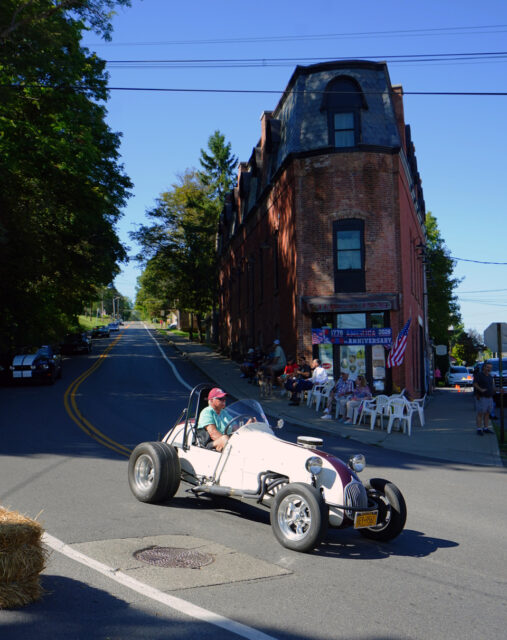
Watkins Glen Fall Festival in the village
Friday morning, we begin where the racing started. Before heading to the track, Jack drives us around the original 6.6-mile road course, used from 1948 to 1952. The circuit runs along the public roads surrounding the village, and much of it remains drivable today. Jack took me around the same course fourteen years earlier, but this time I’m content to sit back and listen as he points out the landmarks to his grandson. We stop at the stone bridge, where Jack and Eliot climb out of the car. Vintage race cars are making their way around the old circuit, and the two of them stand alongside the road as the cars round the bend. Jack has his camera with him, naturally. As each car approaches, he raises it to his eye and fires off a few shots. Eliot stands beside him, watching Grandpa work.
At Watkins Glen International, we collect our media vests and Jack takes Eliot into the media center. He shows him where the photographers and reporters work and explains what the room is like during an actual race: interviews with drivers and team managers; people coming and going; deadlines; information being passed around; everyone trying to figure out what just happened while something else is already happening.
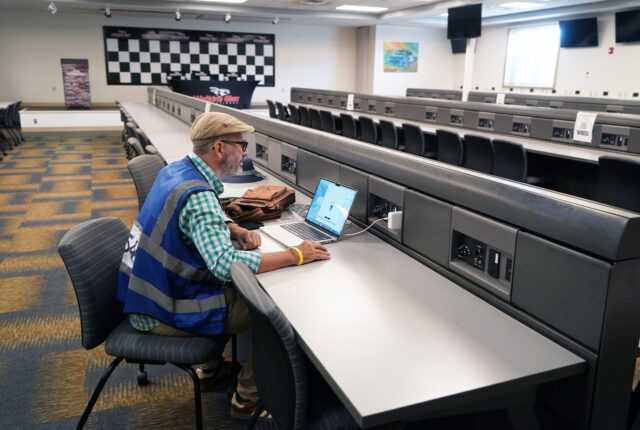 From there we make our way to Victory Lane, where photographs are obligatory, and then into the paddock. Jack tells Eliot his favorite smell here is the gear oil. He says it smells sweet, like bubblegum. To him, the scent is inseparable from racetracks; one whiff and he’s somewhere else, sometime else.
By then I have fallen naturally into position a few paces behind them. This is Grandpa’s tour. I’m only here to watch. As we wander through the paddock, Jack points out cars to Eliot. Near a red 1965 Corvette, I notice a driver crouched beside the passenger side, one wheel removed. He looks up as Jack and Eliot pass. “Excuse me,” he says as I approach. “Would the young man have a minute to help me with my car?” I call Eliot back. His eyes light up.
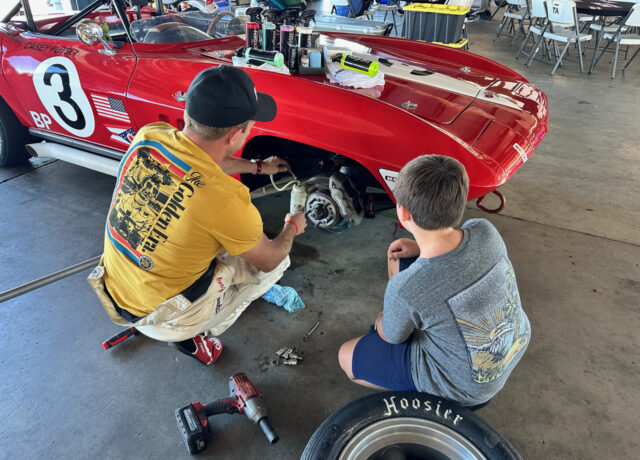
Official bleeder, Eliot
The driver explains that he’s bleeding the brakes and could use another set of feet. He tells Eliot to climb into the driver’s seat and, when instructed, slowly pump the brake pedal until it begins to tighten. Eliot listens intently. Jack, the consummate motorsport photographer, immediately reaches for his camera. As Jack circles the Corvette looking for a better angle, he notices the name painted on the car: Casey Putsch. Casey, it turns out, is known on YouTube as “Casey the Car Guy,” a racing driver, engineer and craftsman. Apparently, we’ve wandered into the bay of someone who knows exactly what he’s doing. Eliot settles behind the wheel. Casey gives the word and he begins pumping the brakes. Slowly and deliberately, exactly as instructed. Casey works on the other side of the car while Jack’ s shutter clicks away. For a few minutes my eleven-year-old son is no longer touring the paddock with Grandpa. He’s on the job. Junior mechanic.
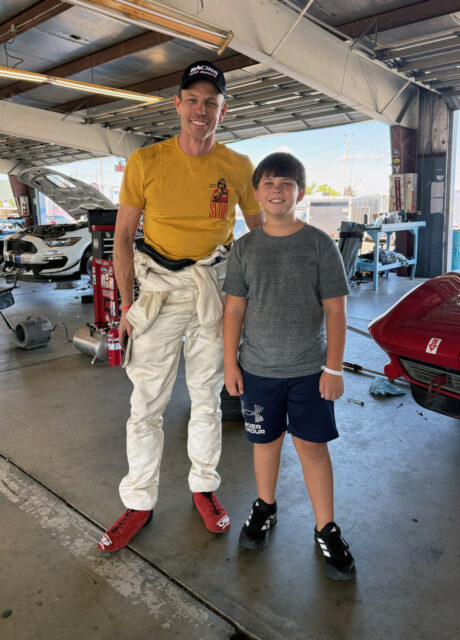
Casey and Eliot
When Casey finishes, Eliot climbs out. He takes a few steps and then turns back for another look at the cherry red Corvette. There is unmistakable pride on his face. Only an hour after arriving at his first racetrack, he has been asked by a race car driver to help work on his actual race car. Some people live a charmed life.
At some point Jack remembers the ice cream.
He tells Eliot that upstairs in the media center cafeteria they always have soft serve. This is presented as yet another of Watkins Glen’s reliable pleasures, and Eliot of course requires no convincing. Except when we get upstairs, there isn’t any. Jack seems genuinely disappointed. “They always have soft serve,” he repeats. It is a small thing. Almost comically small. But over the course of the rest of the day, Jack begins noticing other things. The track feels quieter, less chaotic than he remembers. As the first races get underway, he points toward the campgrounds. There are fewer campers than the last time he was here. The grandstands look a little thin, too. Entire sections sit exposed between small clusters of spectators.
Jack runs into several photographers he’s known for years. The conversations begin with the usual catching up but eventually arrive at the same observation: the event isn’t what it used to be. As we pass rows of Trans Am’s and vintage Formula One cars, Jack looks less at the cars than at the people surrounding them. “Look at the crews,” he says. “They’re all my age.” He’s exaggerating, of course. But not by much.
“…the history he has spent more than fifty years photographing feels increasingly fragile.”
That afternoon we leave the track and head into Watkins Glen for the festival. Here, at least, Jack seems encouraged. The village is packed. Spectators line Franklin Street several rows deep as vintage cars make their way through town. Vendors fill the sidewalks. Whatever is happening up at the circuit, there appears to be no shortage of people willing to come out and look at old race cars.
Jack spots some old friends selling race car sculptures and stops to talk. Before long, the conversation turns familiar. They tell Jack it’s getting harder to sell nostalgia. People still love racing. That isn’t the problem. But the names and cars that once meant something immediately to a racing fan are becoming harder to sell to people who weren’t there to see them. Jack understands exactly what they mean.
 The last time I came to Watkins Glen with Jack, we had dinner at the Glen Motor Inn with Vic Franzese, its longtime owner. Vic was born here. His grandfather bought the land, his parents started the family business, and much of Watkins Glen’s racing history unfolded on his watch. When telling the story of Watkins Glen, one inevitably told the story of Victor Franzese.
Famous drivers stayed at his motel. So did Paul Newman and James Garner. Vic was the guy who popped the champagne in Victory Lane, owned and raced a McLaren M12, and seemed to possess an inexhaustible supply of stories. During dinner, Vic summed up his life at the Glen this way: “I never had to leave town to see the world, the world came to me.”
Vic died in 2021. The Glen Motor Inn has since been sold. It’s here I begin to see Jack’s concern. The smaller crowds. The empty spaces in the campground. The aging crews. The conversations with photographers and vendors who remember when all of this seemed bigger. Racing itself isn’t going anywhere. Jack knows that. But the history he has spent more than fifty years photographing feels increasingly fragile. He talks about the drivers whose names once carried enormous weight here. Stewart. Cevert. Siffert. Men he photographed when they were still leaping into the race cars. Before they became part of the history’s very fabric. To Jack, these aren’t simply names from another era. He remembers what it felt like when they mattered now.
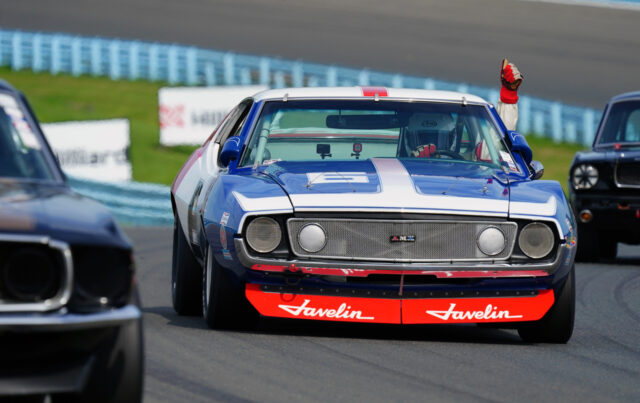
AMC Javelin
I imagine he is beginning to wonder who will remember them when his generation is gone. Maybe that’s part of why bringing Eliot here matters so much. All weekend, Jack has been pointing things out to his grandson. A corner. A car. A driver’s name. A photograph. A story. A sweet smell. This happened here. I saw this. I knew him. Eliot listens.
Sure, maybe Jack’s right to be concerned. History is always fading around the edges. Places change hands. People disappear. Eventually the names that once filled grandstands become names somebody has to explain. But earlier in the weekend, we ran into a younger man who was passionate enough to restore a1965 Corvette and race it at Watkins Glen. When he needed another set of feet to bleed the brakes, he asked an eleven-year-old boy walking through the paddock with his grandfather for assistance. I’m convinced that counts for something.
I hope Jack thinks so, too, when he gets home and begins going through the photographs from the weekend. Somewhere among them will be a picture of Eliot sitting behind the wheel of that cherry red Corvette, pumping the brake pedal while Casey works beside him. Jack will know exactly what kind of car it is, probably what engine is in it, who raced one and where, and a dozen other things I wouldn’t even know to ask.
But most importantly, Eliot will always know Grandpa took the picture.
With this article, we would like to welcome new contributor, Tony Holloway, who is likely more qualified than any of us here at The Motorsport Diaries, to write for us! Welcome and thank you for this wonderful article. We look forward to many more! JE